How a HK property manager onboarded tenants 90% faster and cut late payments by 40%
A custom tenant management platform combining lease workflows, payment tracking, maintenance triage, AI agents and a tenant-finder — replacing spreadsheets, email threads and phone calls with a single source of truth.
Client snapshot
Client
Hong Kong property management firm
Sector
Real Estate / Property Management
Region
Hong Kong
Company size
30–60 person operations team
Timeline
5 weeks build
Service
Custom Software + AI Agents
Stack
The challenge
The team was running a multi-property portfolio out of spreadsheets, shared inboxes and WhatsApp. Lease onboarding required someone to chase documents across three channels, payments were tracked manually with no real-time view of arrears, and maintenance requests routinely fell through the cracks because there was no single queue. Tenant satisfaction was slipping. New tenants waited days to be onboarded, late-payment reminders were inconsistent, and maintenance ticket status was opaque to both tenants and managers. Leadership wanted a single platform where lease, payment, maintenance and communication lived together — without ripping out the property management system the finance team already relied on.
The solution
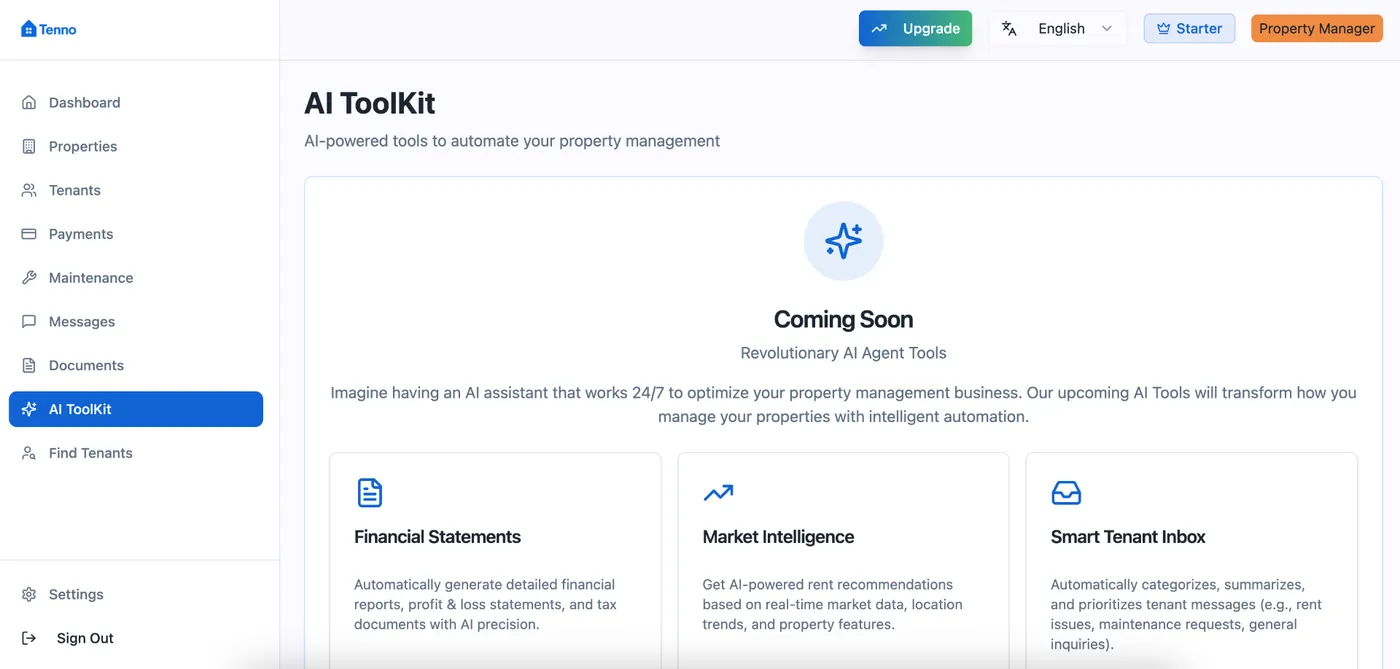
We built a custom tenant management platform that wraps the existing PMS rather than replacing it. Lease onboarding is digitized end-to-end: digital lease drafts, e-signature, document upload, identity checks and welcome communications run as a single workflow with status visible to everyone involved. Payments are tracked in real time against the payment gateway and the PMS. Tenants get automatic reminders before due date, a clear arrears view in their portal, and one-click payment links. Maintenance requests land in a single triage queue with photos, priority and SLA — and an AI agent routes each ticket to the right vendor based on category, location and past performance. A tenant-finder module helps managers fill vacancies faster: it scores enquiries, drafts replies, schedules viewings and keeps a pipeline view across units. Everything is bilingual, mobile-first for tenants, and role-scoped so vendors, accountants and managers only see what they need.
Before
- Spreadsheets, shared inbox and WhatsApp threads
- Manual lease chase across three channels
- No real-time arrears view, inconsistent reminders
- Maintenance tickets lost in email
After
- Single platform layered over existing PMS
- Digital lease onboarding with e-sign and KYC
- Automatic payment reminders, tenant portal arrears view
- AI-routed maintenance queue with SLA tracking
Results
faster tenant onboarding
reduction in late payments
improvement in tenant satisfaction
build to first production release
"Onboarding used to be a week of chasing documents. Now a new tenant is signed, paid and in their unit in a day — and our team sees the whole portfolio on one screen."
Tech stack & integrations
Want results like this for your team?
Book a free 45-minute scoping call. We'll map your highest-leverage SOP and tell you honestly whether AI is the right tool.
See all case studies